
 De
De
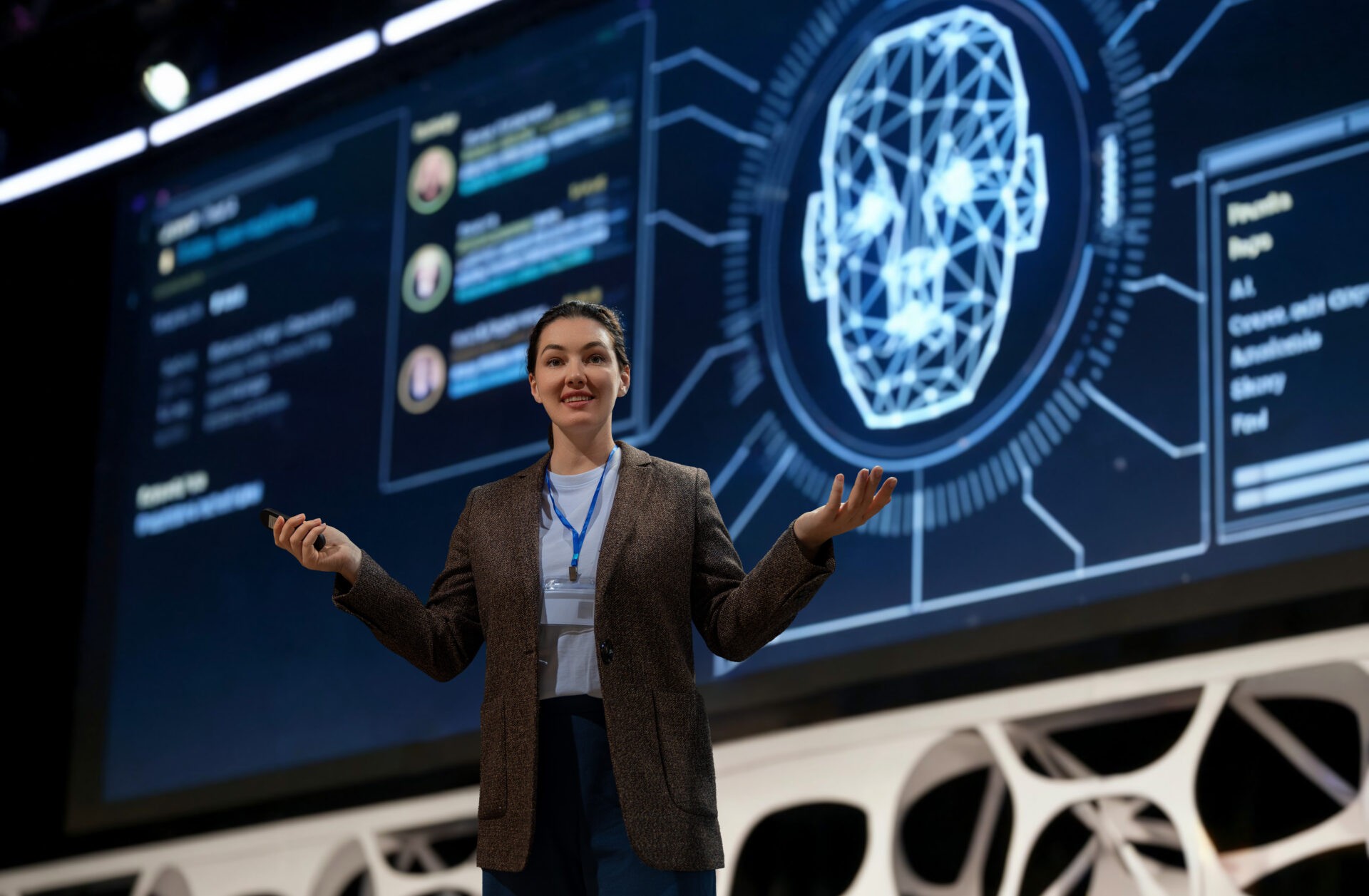
Artificial intelligence is already shaping daily life in Germany’s cities. From Stuttgart’s punctual trains powered by predictive analytics to Hamburg’s smarter traffic management, AI systems deliver measurable results. With €5 billion in federal initiatives, Germany is turning urban centers into testbeds for ai driven innovation that combine efficiency, data sovereignty, and public trust.
Successful AI Use Cases in German Metropolises
Across Germany, cities are showing how AI systems move from theory to practice. Berlin drives AI driven innovation with its startup scene, Munich leads in digital twin manufacturing, Hamburg optimizes logistics with intelligent systems, Frankfurt strengthens finance through fraud detection, and Stuttgart makes trains smarter with predictive analytics. Together, these use cases prove that artificial intelligence delivers real benefits when integrated into urban life.
Berlin – AI for Startups and Digital Services
Berlin is Germany’s hotspot for artificial intelligence. Over 500 startups and numerous research institutions in the Berlin–Brandenburg region work on projects from Big Data and machine learning to chatbots for municipal services. The city also plays a central role in fundamental research, giving companies and citizens a clear view of current trends and their real-world applications.
Healthcare makes Berlin’s role especially visible. At the Charité AI Hub, more than three petabytes of anonymized data support diagnostic research. Pilot studies show 17% better triage results and sharply reduced response times, proving how AI improves efficiency and the patient experience.
Daily life also benefits: multilingual chatbots handle citizen queries 24/7, fraud detection secures tax and social services, and OCR accelerates document handling. Berlin’s PropTech scene develops tools for real estate, while participatory budgeting platforms ensure transparent civic engagement. All this positions Berlin as a leading ecosystem for smart innovation in Europe.
Munich – AI in Industry 4.0 and Production
Munich stands for high-tech and industrial digital transformation. With 1,400+ AI projects and strong partners such as BMW, Siemens, and Audi, the city is a center for intelligent manufacturing. Close links between universities, research, and companies ensure new capabilities reach the workforce quickly.
At BMW’s plants, computer vision systems powered by advanced AI-models cut inspection cycles from 40 to 24 seconds while improving defect detection by 40%. Siemens and Audi use digital twins to plan assembly lines virtually, reducing planning time by 35%. These applications highlight how industry–academia collaboration generates measurable value.
Households also benefit: start ups like Tado° provide smart heating that analyzes usage patterns and adjusts automatically, saving energy and costs. With a dedicated AI hub and strong academic pipeline, Munich consolidates its role as Germany’s leading industrial innovation hub.
Hamburg – Logistics and Supply Chain Optimization
Hamburg combines mobility, digitalization, and sustainability. As Germany’s largest port, the city uses AI platforms to streamline supply chains. Real-time digital twins track container flows, predict maintenance, and optimize berth allocation.
In public transport, AI analytics already delivers results: graph-based models and floating-vehicle data cut bus travel times by 9% and emissions by 6%. Climate resilience is another focus: simulation tools model extreme weather to strengthen flood protection and urban planning.
Logistics firms such as DHL apply reinforcement learning to adapt routes dynamically for faster deliveries. AI-controlled waste heat recovery has cut cooling energy use by 18%. Hamburg shows how AI links economic growth, sustainability, and better citizen services.
Frankfurt – AI in Finance and Banking
Frankfurt is Germany’s fintech hub, where AI drives both security and efficiency. Banks and startups use AI to improve speed and transparency across critical processes.
With Hawk AI, suspicious flows are detected within seconds, helping institutions meet EU AML rules. Deutsche Bank’s 275-petaflop GPU grid accelerates trade surveillance by a third while reducing false positives by 41%. Such systems process millions of transactions daily and maintain detailed audit trails.
Beyond monitoring, AI-powered business intelligence enables more precise risk assessment and investment decisions. Automated compliance monitoring tools scan regulatory updates, ensuring accurate and cost-efficient adaptation. This mix of research, oversight, and innovation makes Frankfurt a model for responsible AI in finance.
Stuttgart – Automotive Industry & Predictive Analytics
Stuttgart stands for cars and now also for AI driven mobility. On the S-Bahn, a dispatcher tool uses predictive analytics to achieve 96% punctuality, preventing delays. Automated train inspections cut times from 45 to 8 minutes, boosting reliability and lowering costs.
In vehicle manufacturing, computer vision inspects thousands of components daily, improving defect detection by 40%. Bosch and others experiment with generative AI to optimize design and simulate production, reducing cycles while keeping quality high.
By linking real-time traffic data with public transport, Stuttgart also enables smarter route optimization that saves energy and improves capacity use. These systems show how Stuttgart bridges traditional engineering and digital transformation in mobility.
The Most Important AI Tools Companies Use
Artificial intelligence is no longer a distant future project. It has already become part of everyday business in Germany. From text generation to predictive data analysis and automated production lines, the range of AI tools continues to expand. Four categories are especially relevant in German cities today.
Generative AI (text, images, videos)
Generative models are currently driving many innovations. They create text, images, and videos automatically, which helps companies save time in marketing, documentation, and customer services.
In Berlin, legal tech startups use AI-powered systems to draft contracts and check compliance more efficiently. In Munich, marketing agencies rely on generative platforms to produce multilingual content at scale.
Transparency is key. With retrieval augmented generation, firms combine their own data with large language models to achieve audit-ready and explainable AI outputs that comply with EU requirements. Through fine tuning, companies adapt these models to their industries, for example for technical manuals in automotive or financial reporting. At the same time, synthetic data enables training of machine learning models without exposing sensitive information.
Automation tools and low-code platforms
Automation is one of the most practical use cases for AI. Low-code platforms allow teams without deep programming skills to develop their own systems and make them operational quickly, giving broader access to AI solutions. Standardized APIs ensure smooth integration with existing software infrastructure.
Typical examples include:
- Automatic classification and storage of documents and e-mails
- Intelligent routing of customer requests in service centers
- Workflow optimization with adaptive algorithms that continuously learn from user data
This approach lowers implementation costs and shortens the time until results appear. Many companies in Germany start small with pilot projects and scale up once measurable value is achieved.
Data analytics and BI solutions
Modern organizations generate enormous volumes of data, but without the right technology much of it remains unused. AI-powered business intelligence solutions transform these information streams into actionable insights for better decision-making.
With predictive analytics, firms can perform accurate demand forecasting, optimize inventory, and identify customer churn early. In retail, that means full shelves without excessive storage costs. In manufacturing, it means fewer unplanned shutdowns.
Interactive dashboards present complex market data in a way that helps executives spot opportunities or risk factors immediately. Real-time anomaly detection adds another layer, whether it is unusual spikes in energy consumption or suspicious financial transactions.
Industry-specific tools (e.g., healthcare, automotive, finance)
Beyond general platforms, many industries rely on tailored AI solutions designed for their specific needs.
- Healthcare: German hospitals deploy AI systems to analyze X-rays, lab results, and patient histories, supporting more precise diagnoses while upholding strict privacy standards.
- Automotive: Computer vision inspects each component with unmatched accuracy, while predictive maintenance models analyze sensor data to prevent costly failures. AI algorithms also support the development of autonomous vehicles.
- Finance: Banks and fintechs use AI for market data analysis, risk assessment, and algorithmic trading. Real-time fraud detection identifies suspicious flows within seconds, improving security and customer trust.
Benefits for Companies in Urban Environments
Practice shows that companies using AI systems in daily operations benefit on multiple levels. From lower costs and sustainability gains to stronger market positions, the effects go far beyond efficiency.
Key advantages of artificial intelligence:
- Efficiency boost: Shorter planning cycles, fewer breakdowns thanks to predictive maintenance, and faster workflows in administration and production.
- Scalability: AI systems like chatbots or document processors grow with demand without requiring extra staff.
- ESG transparency: AI automatically tracks emissions, energy use, and social metrics, making them available for stakeholders.
- Cost reduction: Preventive maintenance and optimized resource use cut operating costs significantly.
- Innovation power: Generative models speed up development and enable new designs or services.
- Competitive edge: Early AI adoption strengthens market position and builds trust with customers and partners.
Efficiency increase, scalability, ESG transparency
AI boosts efficiency across nearly all industries. In manufacturing, digital twins shorten planning times by a third, while predictive analytics detects failures early and lowers maintenance costs. Examples from industry show how robots and intelligent software work hand in hand to relieve employees.
Public administration also benefits: chatbots and automated document workflows free up staff and accelerate day-to-day processes.
At the same time, AI systems ensure better scalability. They can process millions of data points without the need for additional resources. Sustainability is another crucial factor: AI-powered monitoring solutions provide transparent ESG data, from energy consumption to emissions, making progress visible for companies and society alike.
Competitive advantage through early AI adoption
Companies that integrate AI early secure a clear lead. They react faster to market changes, personalize products, and improve services more precisely. Machine learning in marketing boosts campaign efficiency, while generative models deliver new designs or texts within seconds.
Regions like Berlin–Brandenburg demonstrate how AI startups drive innovation. Firms investing today in research, infrastructure, and academic partnerships build a foundation for long-term competitiveness. Early AI adoption is not an experiment, it’s a strategic decision shaping the future of Germany’s economy.

Challenges and Success Factors
The use of artificial intelligence in German cities is not automatic. While the technology offers huge potential for administration, business, and society, practice shows that certain conditions must be met.
Three factors stand out in particular:
- the quality of the data
- the availability of skilled professionals
- the integration of new systems into existing structures
Data quality, skilled workforce, integration into existing systems
For AI to succeed in German cities, several prerequisites are essential. At the center are three factors:
Data quality
A reliable data foundation is the basis of any AI application. Without structured, clean, and sufficiently large datasets, algorithms cannot deliver accurate results. Cities and companies therefore invest in professional data management, secure platforms like GAIA-X, and anonymization techniques for sensitive information.
Skilled workforce
Without people who have the necessary expertise, even the best technology remains ineffective. The demand for qualified AI specialists continues to grow. Universities and research institutions in regions such as Berlin-Brandenburg or Munich respond with targeted programs that combine technical skills with industry practice. This creates a new generation of professionals able to use AI responsibly.
Integration
New systems must be compatible with existing IT landscapes. Integrating AI into established administrative or production processes is often complex. Successful projects therefore start with pilot applications in clearly defined areas, which are then expanded step by step. This approach minimizes risks and builds experience before technologies are scaled.
Outlook – The Role of AI in German Cities by 2030
The coming years will show how strongly artificial intelligence will transform urban life in Germany. Already today, certain developments indicate the direction of travel. Three trends are likely to shape both public administration and the economy in the years ahead.
Key trends – Generative AI, AI + IoT, EU-AI-Act
Clear developments are already emerging that will define AI adoption in German cities up to 2030. Three stand out in particular:
- Generative AI: It will not only create text or images, but also automate administrative documents and simplify citizen interaction. For companies, it opens new opportunities in marketing, reporting, and customer service.
- AI + IoT: The combination of sensors, 5G networks, and learning systems enables cities to respond in real time. From traffic management to energy use and infrastructure planning, processes become more efficient and sustainable.
- EU-AI-Act: With the new European legal framework, cities and businesses gain more legal certainty when deploying AI. At the same time, requirements for transparency, data protection, and safety increase.
Why cities will remain the drivers of innovation
Cities are dense living environments where large amounts of data are generated every day and numerous application fields converge. From mobility to energy supply and administration, they provide the ideal testing ground for intelligent solutions.
Research institutions, AI startups, and established companies collaborate closely in these urban ecosystems. The result: innovation hubs that pool knowledge and bring new technologies quickly into practice. What succeeds in Berlin, Munich, or Hamburg can later be scaled to other regions across Europe.
By 2030, German cities will therefore play a central role: as engines of digitalization, as spaces for responsible AI experimentation, and as models for cities worldwide.
Frequently Asked Questions
How do German cities use AI in public transport?
Stuttgart’s S-Bahn uses predictive analytics for 96% punctuality, while Hamburg applies graph-based AI to cut bus travel times by 9%. These systems analyze traffic and passenger flows in real time to improve reliability.
What role does the EU AI Act play for German AI projects?
The EU AI Act sets clear rules for transparency, safety, and accountability. This gives German cities and companies legal certainty while ensuring citizens’ trust in AI applications.
Are SMEs also benefiting from AI in Germany?
Yes. Many small and mid-sized firms use low-code platforms, chatbots, and predictive analytics to automate tasks. Pilot projects are often the first step before scaling AI to full operations.
Which sectors benefit most from AI in German cities?
Transport, healthcare, finance, and manufacturing show the strongest results. From fraud detection in Frankfurt to digital twins in Munich, AI helps reduce costs and increase efficiency.